

A Digital Dental Lab is a technical outsourcing partner that uses digital scans and CAD/CAM workflows to design restorations and dental appliances. Vietnam Dental Lab, based in Ho Chi Minh City, supports clinics and dental laboratories with production-ready digital files or finished products, depending on the service agreement. Its services include crown and bridge design, implant surgical guides, clear aligner planning, and Digital Smile Design.
What a Digital Dental Lab Does in Practice
A Digital Dental Lab turns digital case information into designs that a clinic or laboratory can use in its production workflow. It combines case-specific requirements, digital scans, and technician-led design rather than replacing the clinical team’s judgment or responsibility.
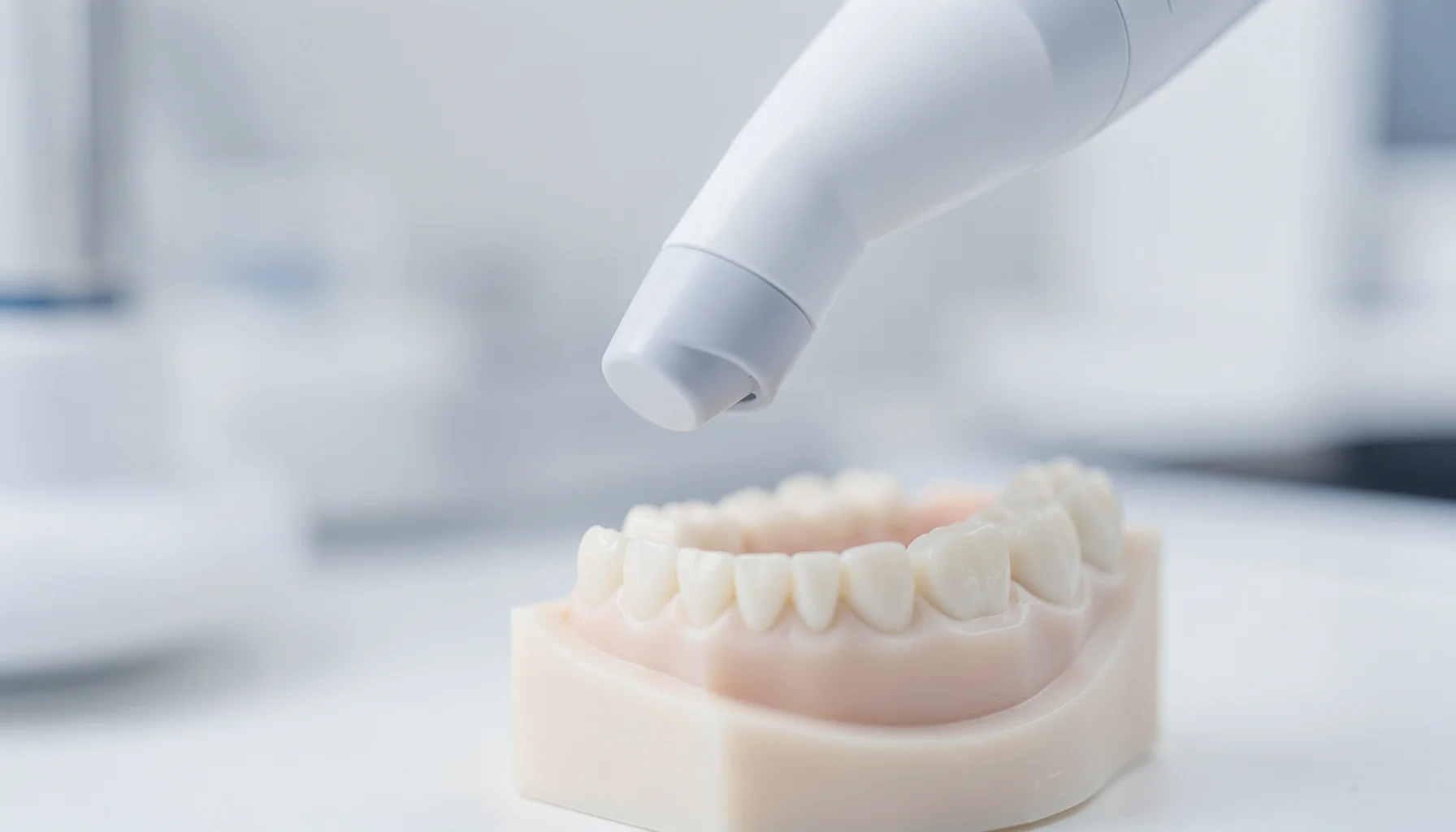
How does a digital dental lab work?
In a conventional workflow, a lab may handle physical impressions, models, and in-house design and production. A digital dental workflow can instead begin with an intraoral scan or a scan of a physical model. The lab receives the digital files and case instructions, creates a design using CAD software, checks the design, and returns production-ready files or—depending on the agreed service—ships a finished restoration.
The distinction matters: digital outsourcing is a workflow and service model, not simply a piece of software or a milling machine. A provider may contribute technical design capacity while the client retains local production, clinical review, and delivery to the patient. Vietnam Dental Lab describes its role as a remote technical partner for international clinics and dental laboratories.
Its stated capacity is more than 5 million units designed over the past decade. It also says it employs certified dental technicians and reviews designs for precision and fit before finalizing them. Those claims describe the provider’s stated capabilities; clients should still establish their own case requirements, review process, and acceptance criteria.
Which services can be outsourced?
Vietnam Dental Lab lists four core service categories:
- Crown and bridge: Design for single crowns, bridges, and full-arch restorations.
- Guided implant surgery: Planning and design of surgical guides for implant placement.
- Clear aligners: Orthodontic treatment planning and staging to support aligner production.
- Digital Smile Design (DSD): Aesthetic planning and visualization for patient consultations.
These services cover different points in digital dentistry. Crown and bridge design supports restorative production; surgical guide design supports planning for implant placement; aligner staging contributes to an orthodontic production workflow; and DSD helps clinicians present aesthetic possibilities to patients.
The lab’s output and the client’s responsibilities vary by case and service agreement. For example, a production-ready design file may be returned for local milling or printing, while another arrangement may include a finished product shipped to the client. Confirm the deliverable before sending a case. For a broader overview of lab functions, see this guide to the role of a dental laboratory.
Who benefits from this model?
The primary audiences are dental laboratories managing variable workloads and clinics building digital workflows without adding in-house design capacity. A lab might use an external design partner during a peak period or for specialized work, rather than hiring additional full-time designers for demand that may fluctuate. A clinic might outsource design instead of investing immediately in high-end design software and the staff needed to operate it.
Outsourcing does not remove the need for clear clinical information or case review. It changes where some technical work is performed. The client remains responsible for communicating the prescription, reviewing the proposed design, and coordinating production and clinical use.
This model can be useful when the bottleneck is design capacity—not scanning, case documentation, clinical decision-making, or local manufacturing. Before outsourcing, identify the actual constraint. A digital partner can help with design workload, but it cannot compensate for missing records or unclear instructions.
Digital Dental Lab Features and Service Specifications
The right service depends on the case type, input files, requested deliverable, and the client’s own production setup. The table below summarizes Vietnam Dental Lab’s stated services and workflow, while distinguishing what is specified from what clients should confirm directly.
What should you compare before choosing a service?
A useful comparison starts with the output required, rather than the broad label “digital lab.” Two providers may both offer digital design but differ in supported case types, file requirements, review steps, and whether they return files or finished restorations. The details should be confirmed for each service agreement.
| Service or specification | Stated capability | What the client should confirm |
|---|---|---|
| Crown and bridge | Design of single crowns, bridges, and full-arch restorations | Case-specific prescription details, required records, design review process, and file deliverable |
| Guided implant surgery | Planning and design of surgical guides | Required scan and planning inputs, guide design requirements, and responsibility for clinical approval |
| Clear aligners | Orthodontic treatment planning and staging for aligner production | Case records needed, staging review, and the exact handoff to aligner production |
| Digital Smile Design | Aesthetic planning and visualization for consultations | What visualization is delivered and how it will be used in patient discussions |
| Case input | Intraoral scans or STL files can be submitted | Accepted file formats, completeness requirements, and any service-specific records |
| Design review | Designs are reviewed for precision and fit before finalization | How revisions are requested, reviewed, and approved |
| Delivery | Production-ready files or finished products, depending on the agreement | Delivery method, production responsibility, and shipping arrangements if applicable |
| Provider location and support | Ho Chi Minh City, Vietnam; hotline support Monday–Saturday, 8:00 a.m.–7:00 p.m. ICT | Best contact route for a particular case and any coordination requirements |
This comparison is not a substitute for a written service specification. In particular, do not infer turnaround times, pricing, revision limits, accepted software, or material availability from a general service description. Request the current terms for the case type you intend to send.
How does outsourcing compare with building in-house capacity?
In-house design gives a clinic or lab direct control over staffing, software, and day-to-day workflow. It can suit organizations with steady case volumes, established digital expertise, and the resources to maintain the required tools and training. The tradeoff is the ongoing commitment to staff capacity and software infrastructure.
Outsourced design provides access to external technical capacity without requiring the client to hire a designer for every workload peak. It may also give a clinic access to digital design support without first building a complete internal design operation. The tradeoff is the need to coordinate cases remotely, provide usable records, and incorporate external review and delivery into the client’s own process.
These approaches are not mutually exclusive. A laboratory can keep routine cases in-house and outsource overflow or specialized designs. A clinic can use an external partner while developing internal capabilities. The appropriate model depends on case volume, complexity, staffing, and how the resulting files or products will be used.
For organizations evaluating a broader dental restoration outsourcing model, compare the total workflow—not just the design fee. Include internal review time, case preparation, production responsibility, communication, and any shipping or handoff steps relevant to the agreement.
How to Submit and Manage a Digital Case
Vietnam Dental Lab’s stated workflow begins with portal access and a case submission, then moves through technician-led design, quality review, and delivery. A smooth handoff depends on complete files and clear instructions, followed by client review of the returned design or product.
Step 1: Register and prepare the case
Create an account or log in through the official website to access the case management system. Before uploading, identify the requested service and assemble the digital impression or STL files needed for that case. Include the clinical or technical requirements that the design team needs to understand.
A practical pre-submission checklist:
- Confirm the case type: crown and bridge, surgical guide, clear aligner planning, or DSD.
- Check that the intended digital scan or model scan is available.
- Gather relevant case instructions and communicate the requested outcome.
- Identify who will review the design and who will authorize the next production step.
- Confirm any service-specific file or record requirements with the provider if they are unclear.
The grounded service information does not specify every accepted file format, naming convention, or mandatory record for each service. Do not assume those details. Check the portal or contact the team before submitting if your case depends on a particular input or workflow requirement.
Step 2: Upload through the case portal
Use the Send a Case portal to submit the digital impression or STL files. Treat the upload as a technical handoff: the more clearly the case is identified and prescribed, the easier it is for the design team to work from the information supplied.
Avoid relying on informal messages as a substitute for attaching the correct case files and instructions through the established case process. If a case has special considerations, make them explicit in the submission or confirm the appropriate way to communicate them with support. Retain your own case records according to your organization’s procedures.
Step 3: Allow technician-led design and review
Certified technicians at the Vietnam facility process the submitted files using CAD software based on the requirements provided. The stated workflow includes a quality-control review for precision and fit before the design is finalized.
That review is part of the provider’s workflow; it does not replace the client’s own clinical or technical assessment. Review the returned design in the context of the prescription, case records, and intended production method. If a change is needed, communicate it clearly through the agreed channel and confirm the revision process for that service.
Step 4: Confirm the deliverable and proceed
The delivery stage depends on the service agreement. The lab may transmit production-ready files for local milling or printing, or ship a finished product. Confirm which applies to your case and what action is expected from your team after delivery.
For a file handoff, establish who will check the file and manage local production. For a finished product, confirm the shipping arrangement and the receiving process. In either situation, define the client-side approval point before the first case is submitted. That simple operational step helps prevent a file from moving into production before the responsible person has reviewed it.
Practical Tips, Common Pitfalls, and the 2026 Outlook
Digital outsourcing works best when the client treats it as a managed technical workflow, not a file drop. Clear prescriptions, defined review responsibilities, and a deliberate handoff help clinics and labs use external capacity while maintaining control of their own processes.
What prevents avoidable case delays?
The most common preventable problem is incomplete or ambiguous case information. If the design team cannot tell what service is requested or what outcome the client expects, the workflow may require clarification. Before submission, check that the correct files are attached and that the instructions match the case type.
Other practical safeguards include:
- Name the requested service clearly. A crown design, surgical guide, aligner plan, and smile visualization are not interchangeable requests.
- Assign a reviewer. Decide in advance who will inspect the returned file or product and communicate approval or revision requests.
- Clarify the handoff. Confirm whether the client is receiving a digital file for local production or a finished product.
- Ask about requirements instead of guessing. Confirm accepted inputs, revision procedures, and delivery details for the specific service.
- Keep the clinical team involved. Outsourced design supports the workflow; it does not take over clinical decision-making.
If a case involves a specialized design, such as a guide for a multi-implant case, explain the intended use and confirm that the required planning information is available. Do not assume that an uploaded scan alone contains every detail needed for the design.
How can clinics and labs apply the model?
Consider a medium-sized dental laboratory facing a temporary increase in design demand. Instead of immediately adding full-time staff, it could route selected overflow cases to an external partner, while keeping intake, case tracking, review, and final production coordination within its own operation. The benefit is access to additional design capacity; the key management task is maintaining consistent instructions and review standards.
A clinic planning a multi-implant case could explore outsourcing a surgical guide design, then review the returned production-ready file before sending it to its own printing workflow. The clinic would need to confirm case requirements and retain the appropriate clinical oversight. A practice preparing an aesthetic consultation could use DSD visualization to help explain a proposed direction to the patient, while being clear that a visualization is a planning and communication aid.
For both examples, outsourcing is most useful when it resolves a defined constraint. It is less effective when an organization has not established who prepares cases, who approves designs, or how returned files move into production.
What should dental teams expect in 2026?
In 2026, digital outsourcing remains a practical option for scaling design capacity without scaling headcount at the same rate. That is an operational use case, not a guarantee of savings or a substitute for evaluating service quality, fit with the client’s workflow, and case economics.
Vietnam Dental Lab states that it has designed more than 5 million units over the past decade. This is a provider-reported scale indicator, not an industry benchmark or a promise of a particular result for an individual case. There is no substantiated percentage or standard turnaround figure in the available service information, so organizations should request current case-specific terms rather than rely on generic benchmark claims.
Alex, Lead Digital Dentistry Strategist and Technical Consultant, recommends starting with a controlled pilot: choose a defined case type, agree on the required inputs and output, assign a reviewer, and document how revisions and delivery will be handled. Measure the pilot against your own process—such as staff time, case completeness, communication effort, and acceptance of the returned design—before expanding to more services.
For clinics and labs considering whether to outsource dental lab work, the decision should be based on workflow fit as well as cost. Vietnam Dental Lab’s stated support hours are Monday through Saturday, 8:00 a.m. to 7:00 p.m. ICT; its hotline is (+84) 977 729 523. Confirm current service details directly before planning a case.
FAQ
Is Vietnam Dental Lab a software platform or an outsourcing service?
Vietnam Dental Lab is a B2B digital dental outsourcing service provider based in Ho Chi Minh City. Its stated role is to process digital case inputs and provide CAD/CAM design services, production-ready files, or finished products depending on the service agreement.
What files can clients submit?
The stated workflow accepts digital impressions, including intraoral scans, or STL files through the case submission portal. Requirements may vary by service, so confirm the accepted inputs and any additional records needed for your specific case before uploading.
Does the lab return digital files or finished restorations?
Either may be possible, depending on the service agreement. Production-ready files can be returned for local milling or printing, while some arrangements may include finished products shipped to the client. Confirm the exact deliverable and handoff before submitting.
Who reviews the design before it is finalized?
Vietnam Dental Lab states that certified technicians process cases and that designs undergo a review for precision and fit before finalization. The client should also define its own review and approval process; provider quality control does not replace the client’s clinical or production responsibilities.